NHS services across the Thames Valley are preparing for industrial action by resident doctors (formerly known as junior doctors).
The British Medical Association (BMA) has announced that its members will walk out from 7am on Monday, 15 June and the strike would end at 6.59am on Friday, 19 June.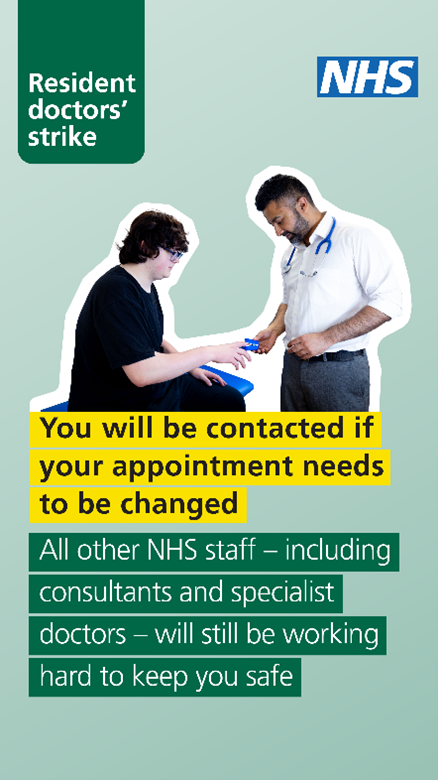
During this period, all other NHS staff (including consultants and other specialist doctors) will still be working, and the focus of the NHS will be on ensuring as many services as possible continue to operate safely.
The NHS will be working with the BMA to discuss any patient safety concerns and ensure safe staffing for emergency care continues to be available.
While NHS Trusts will do their best to only cancel planned appointments where it is necessary, there may be disruption to some services. Patients with appointments booked on strike days will be contacted if their appointment has to be rescheduled due to industrial action. If they have not been contacted, they should attend their appointment as planned.
Regardless of any strike action taking place, it is important that patients who need urgent medical care continue to come forward as normal, especially in emergency and serious life-threatening cases - when someone is seriously ill or injured, or their life is at risk.
General practice, community pharmacies, and dentistry are open, and the public should continue to access these services as needed on strike days.
Local people are being asked to choose services appropriately during industrial action and take simple steps to help ensure care is available to patients who need it most.
Dr Lalitha Iyer is Chief Medical Officer of NHS Thames Valley Integrated Care Board and is also a GP. She stressed that with resident doctors on strike it was especially important to make appropriate choices around healthcare services.
She said: “When we all make the right choices around the healthcare services that we access, not only are we more likely to get the treatment we need, we’re also more likely to be seen more quickly, because healthcare services can work more effectively for everyone. This includes all treatments, from your own ability to care for minor ailments at home with a well-stocked medicine cabinet or first-aid kit, to your local pharmacy, your GP, NHS111, your local urgent care or minor injury service, right up to 999 and A&E.
“General Practice will be open as usual during the week and community pharmacies can treat a range of minor health concerns, as well as provide medication for some conditions without prescription.”
Dr Iyer stressed: “Anyone who needs urgent or emergency care should seek care in the normal way: for urgent care, contact NHS111 online or by phone, and; for emergency services, in the event of serious, potentially life-threatening health situations, call 999 or go to the nearest A&E department.”
People with ongoing health needs should make sure they have what they need ahead of the strike, such as any medication they use to manage any long-term health conditions they may have.